Industry Background
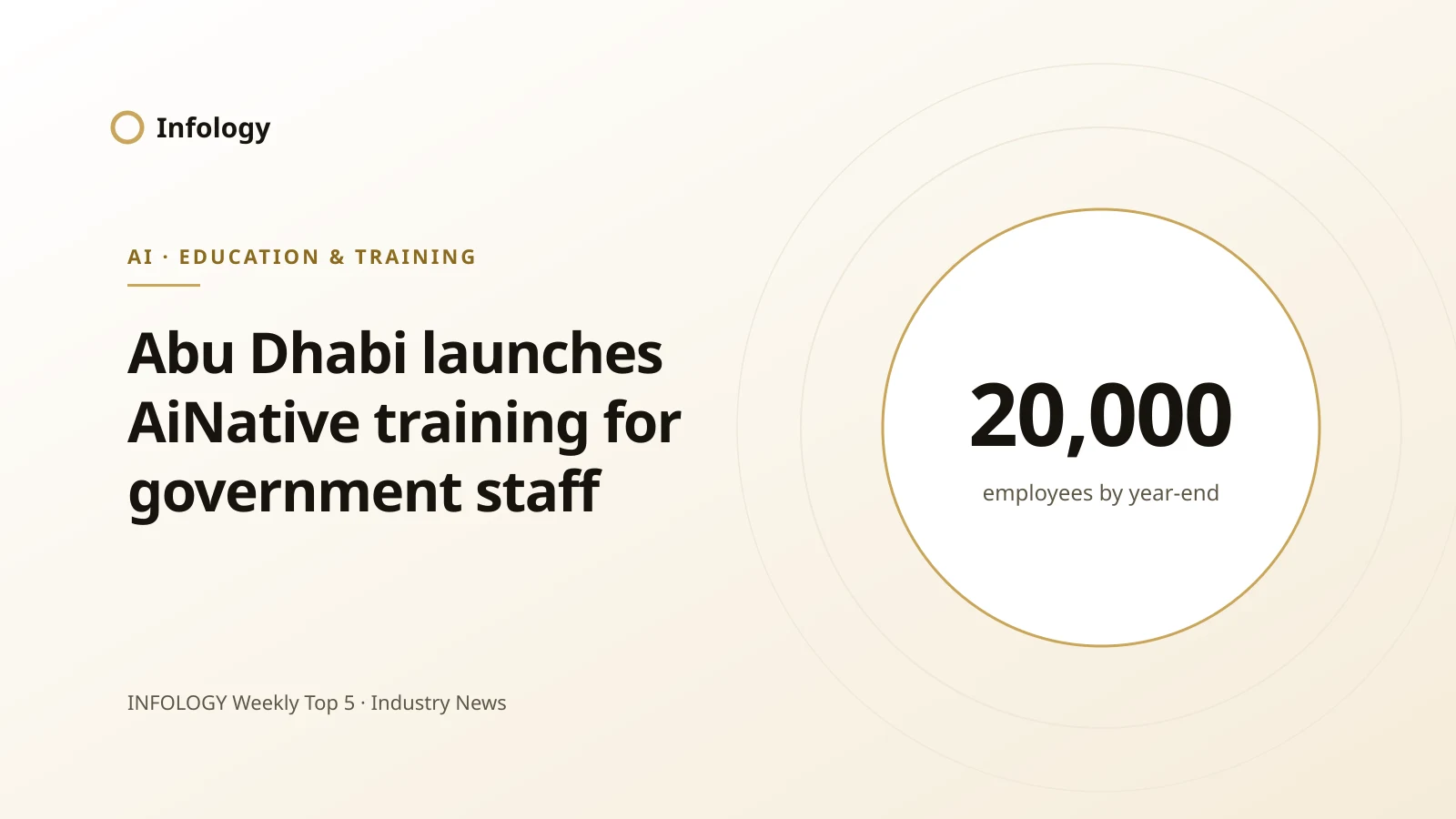
Reported figures include AED 13 billion allocated to digital infrastructure and a target to automate all government processes under the Digital Strategy 2025–2027. Government staff will learn practical use of ChatGPT, Codex and Microsoft 365 Copilot; an internal pilot is under way.
Public training will be delivered through the free version of ChatGPT, covering topics such as personal finance, small-business management and job searching. Later phases will add function-specific certifications such as coding and data. Separately, a Microsoft 365 Copilot rollout to 35,000 government employees was announced in July.
Why This Matters
Public-sector adoption at this scale creates a large, standardised base of AI-literate users and signals to private employers what competencies will be expected. A government that trains staff in specific commercial tools also shapes vendor ecosystems, procurement preferences and the workforce's tool familiarity.
Implications for Businesses
Private employers should expect candidates and counterparts to be fluent in generative AI tools, which raises the baseline for productivity and service expectations. Corporate training providers face both competition from free public offerings and opportunity in advanced, sector-specific programmes. Companies dealing with government will find procurement and workflows increasingly digital and AI-assisted.
Interpretation: basic AI literacy will become a commodity, while differentiated value moves to applied, industry-specific skills and governance.
Implications for the UAE Market
The programme complements national upskilling efforts, including a teachers' AI programme and the UAE Skills Platform. For Emiratisation, the stated expectation of more than 5,000 employment opportunities links skills policy to workforce goals. Dubai-based organisations may see the Abu Dhabi model replicated by other emirates; the Dubai Future Foundation and Sharjah have launched their own agentic AI initiatives.
Interpretation: competition among emirates for AI talent and credibility will intensify.
Implications for International Companies
Technology vendors, edtech firms and training providers from the US and Georgia should position around gaps the free programme will not fill: sector-specific certification, governance, AI in operations and executive education. Partnerships with universities and government-linked bodies appear to be the credible route. Multinationals establishing regional hubs can assume a growing pool of AI-literate staff but should plan for wage pressure for advanced skills.
Suggested Actions for Executives
- Benchmark internal AI-skills levels against the emerging public baseline.
- Build advanced, role-specific training rather than duplicating free basic courses.
- Explore partnerships with universities and government training initiatives.
- Establish AI-use governance policies alongside training.
- Track Emiratisation implications of skills programmes.
INFOLOGY Perspective
The business decision is where to invest in capability when basic AI skills become widely available. INFOLOGY Management Consulting helps education and training providers and employers position offers against national skills programmes.
Sources: The National, 7 Oct 2026; Gulf News, 7 Oct 2026.